Tavish AI Agent
2025
IOS Application

Background
Bayer Crop Science's technical agronomists rely on product recommendations to advise farmers on the right products and practices for their fields. The existing tools for generating these recommendations were slow, fragmented, and hard to trust, which limited both agronomists' confidence and the business impact of Bayer's underlying data and models.
My Role
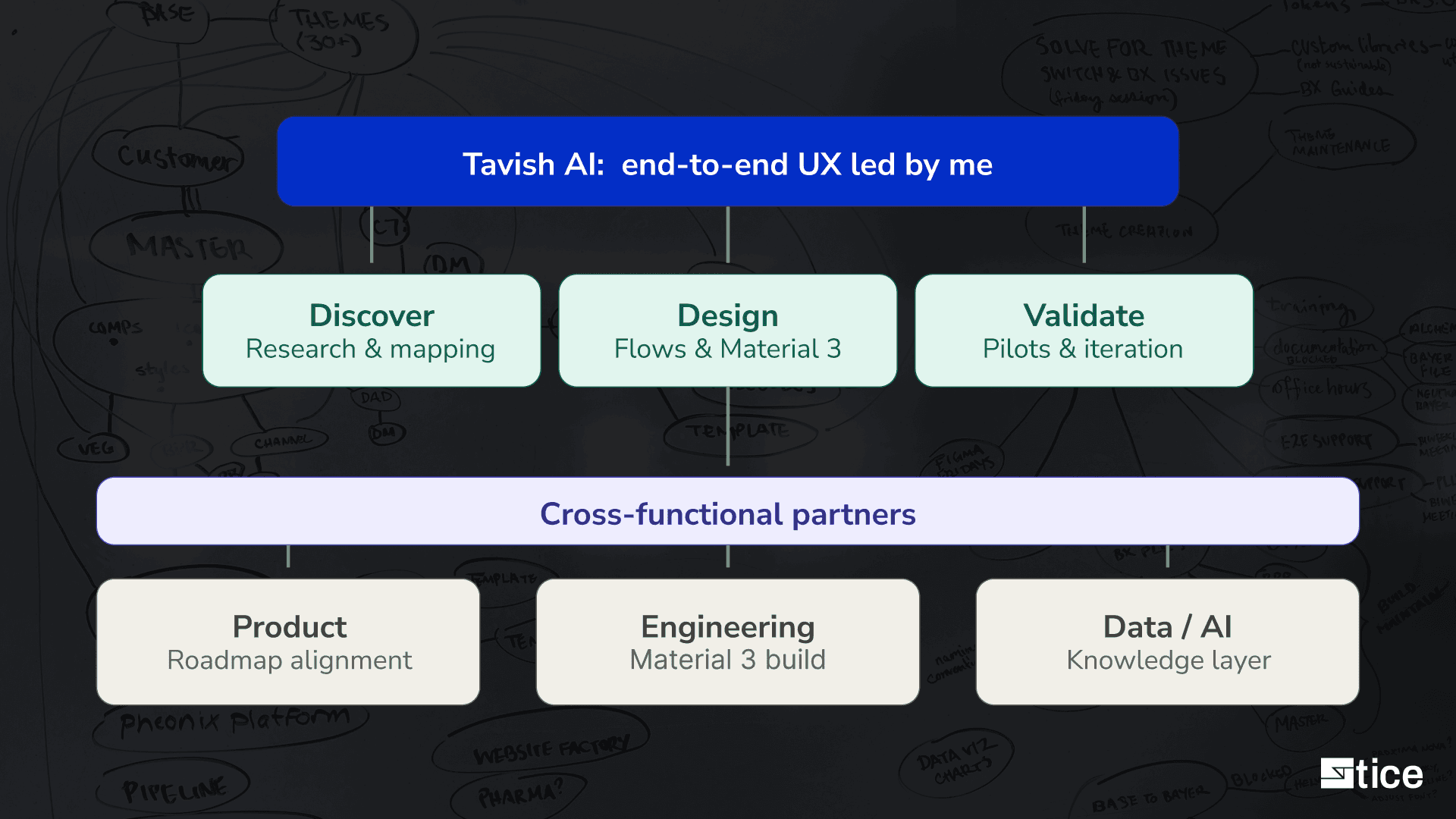
I led end-to-end UX for Tavish, Bayer's AI recommendation assistant, from research and journey mapping through interaction design and cross-platform delivery. I partnered closely with product, engineering, and data/AI teams to evolve an outdated tool into a modern AI assistant that matched current AI interaction guidance and real agronomist workflows.
Challenges
Slow, fragmented recommendation tools. Existing tools made it hard for agronomists to quickly generate tailored, region-specific recommendations, which limited their confidence advising farmers.
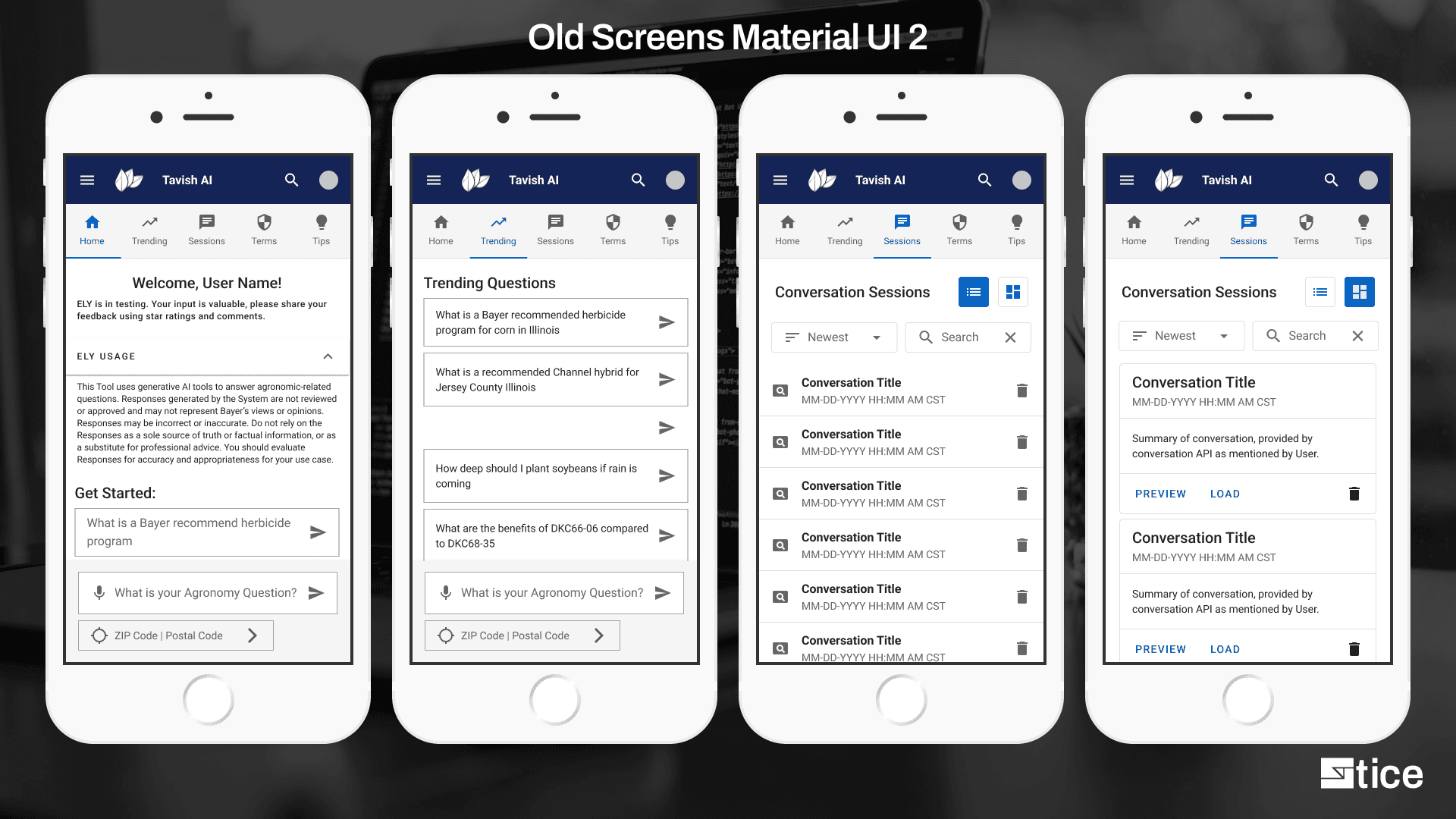
An AI agent stuck on outdated tooling. Tavish's underlying capability had outgrown its Material UI 2 interface, creating a gap between what the assistant could do and how it presented itself.
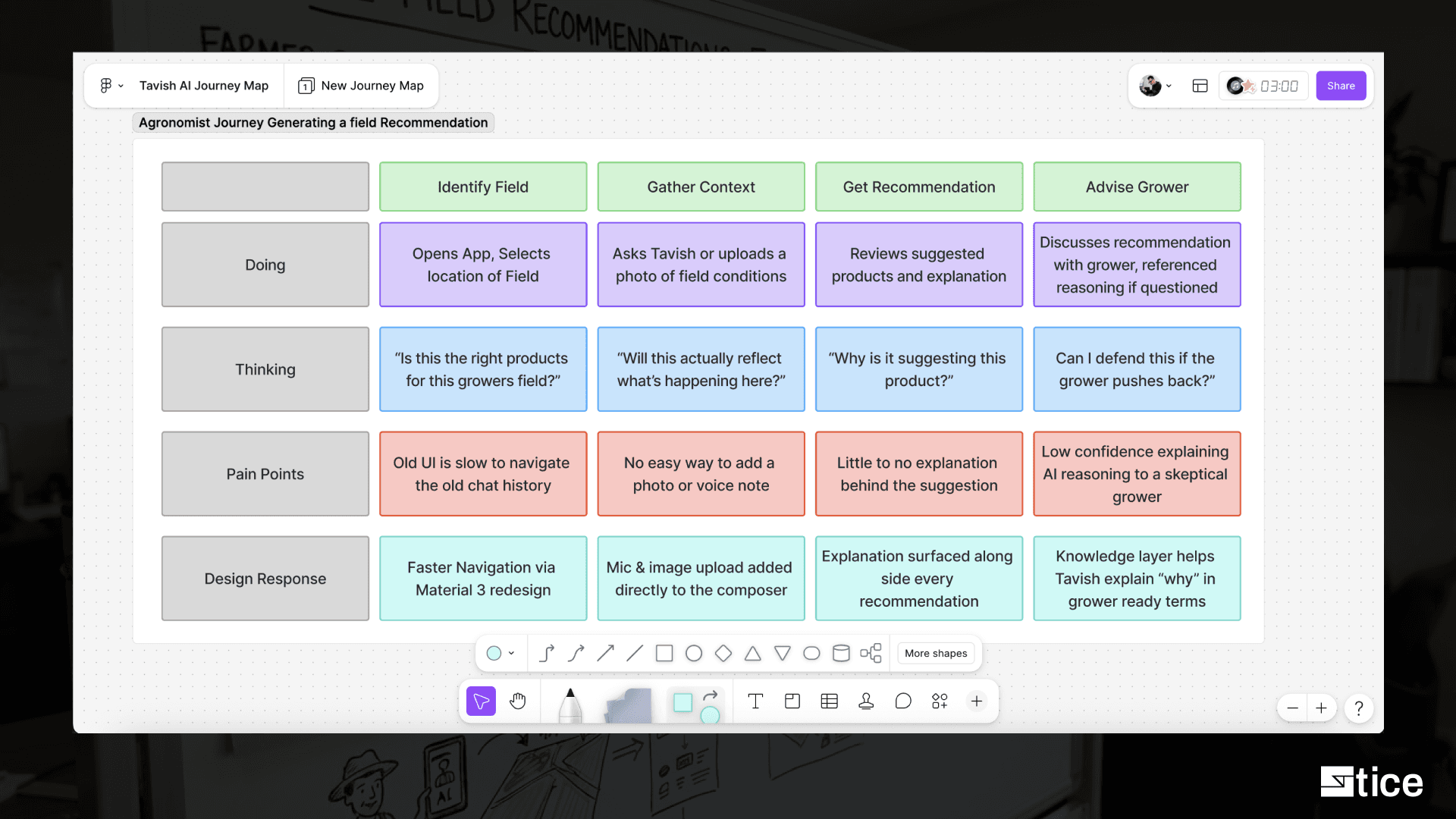
Low trust in AI-driven recommendations. Agronomists needed to understand why Tavish was suggesting specific products, not just receive an output to accept or ignore.
Solution
Discover
I ran interviews, reviewed usage analytics, and mapped current agronomist workflows to understand how recommendations were being made and where friction was showing up.
Define
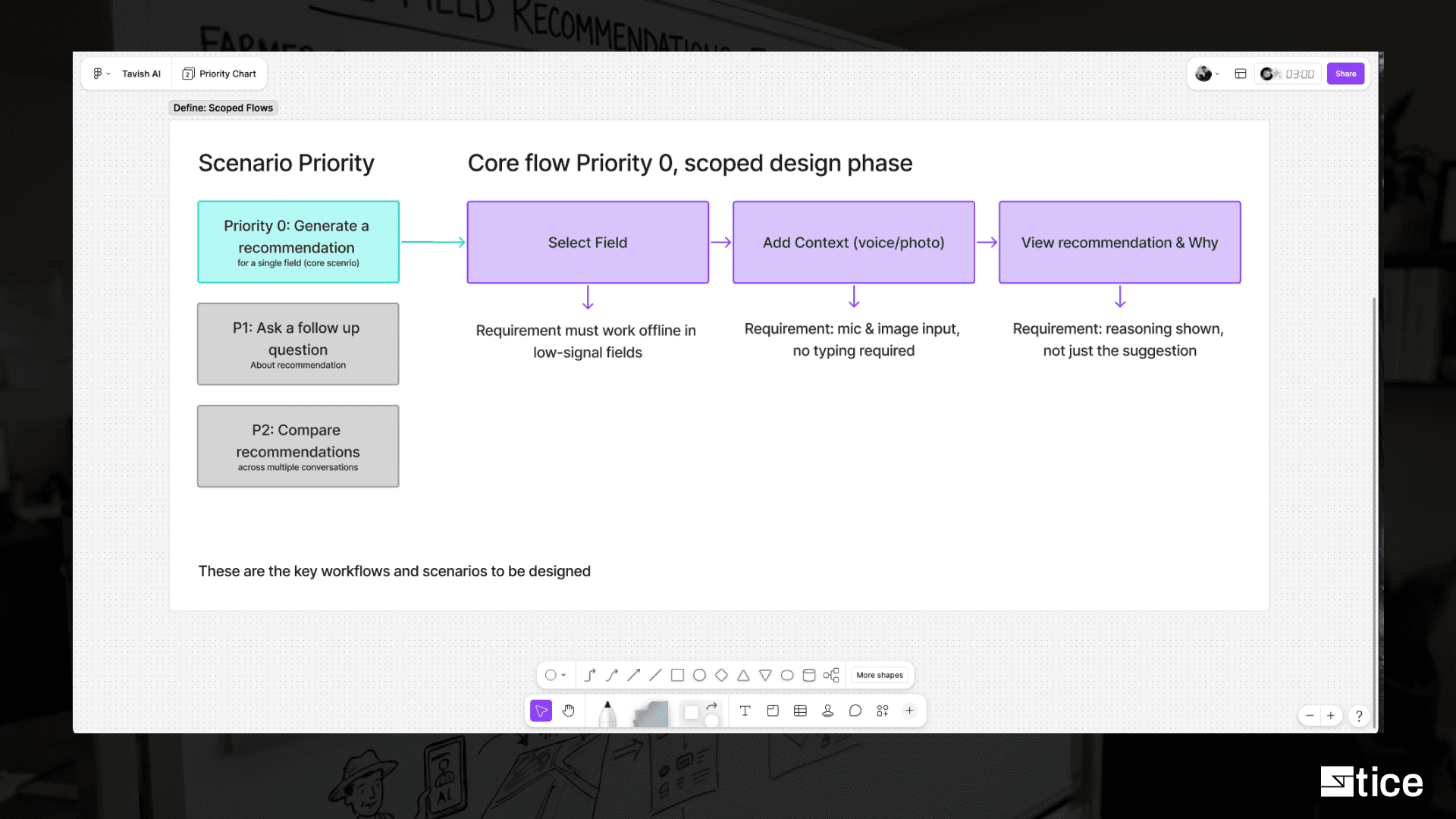
I clarified jobs-to-be-done, key scenarios, and regional constraints, translating them into prioritized flows and requirements for the redesign.
Design
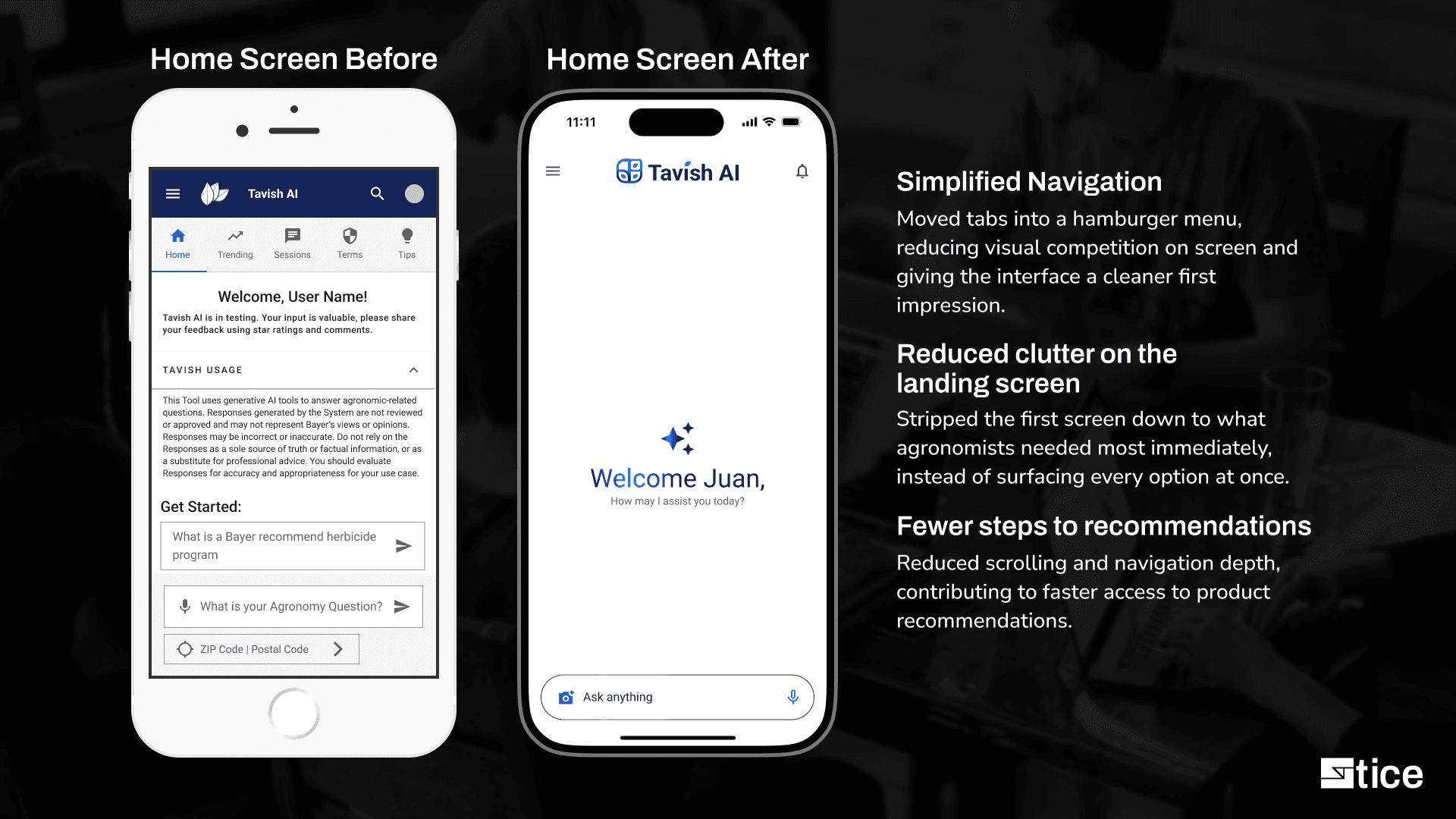
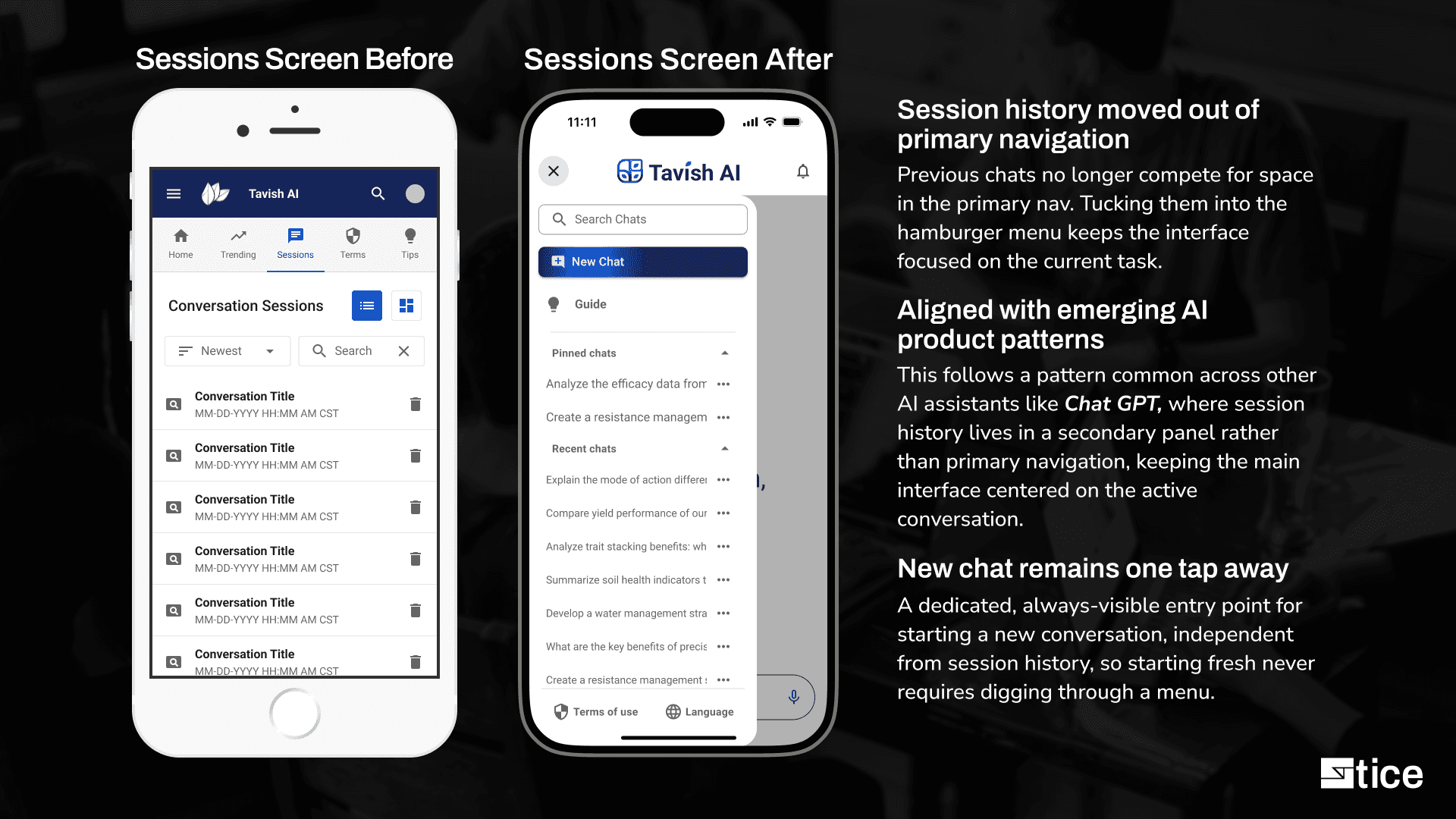
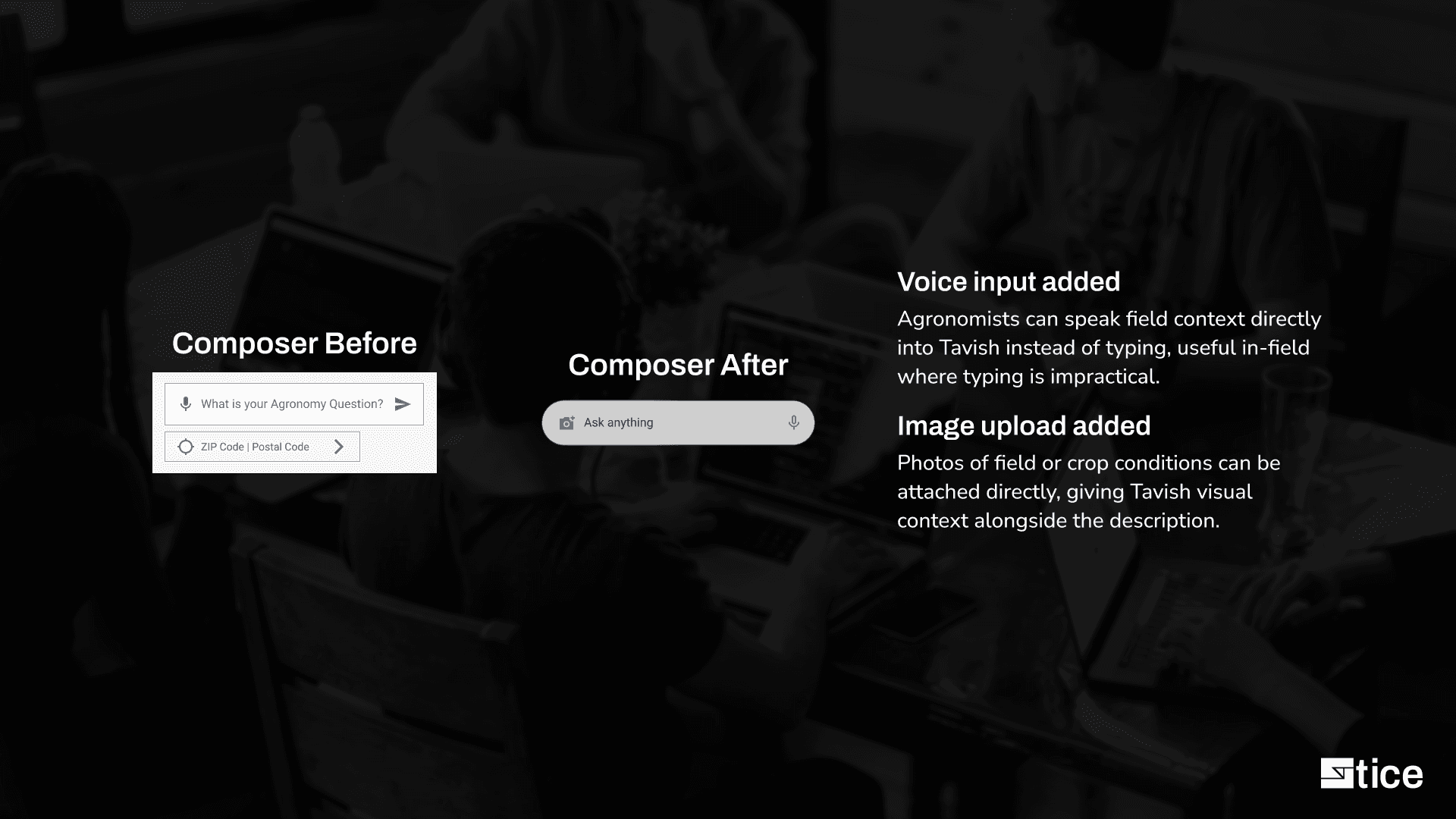
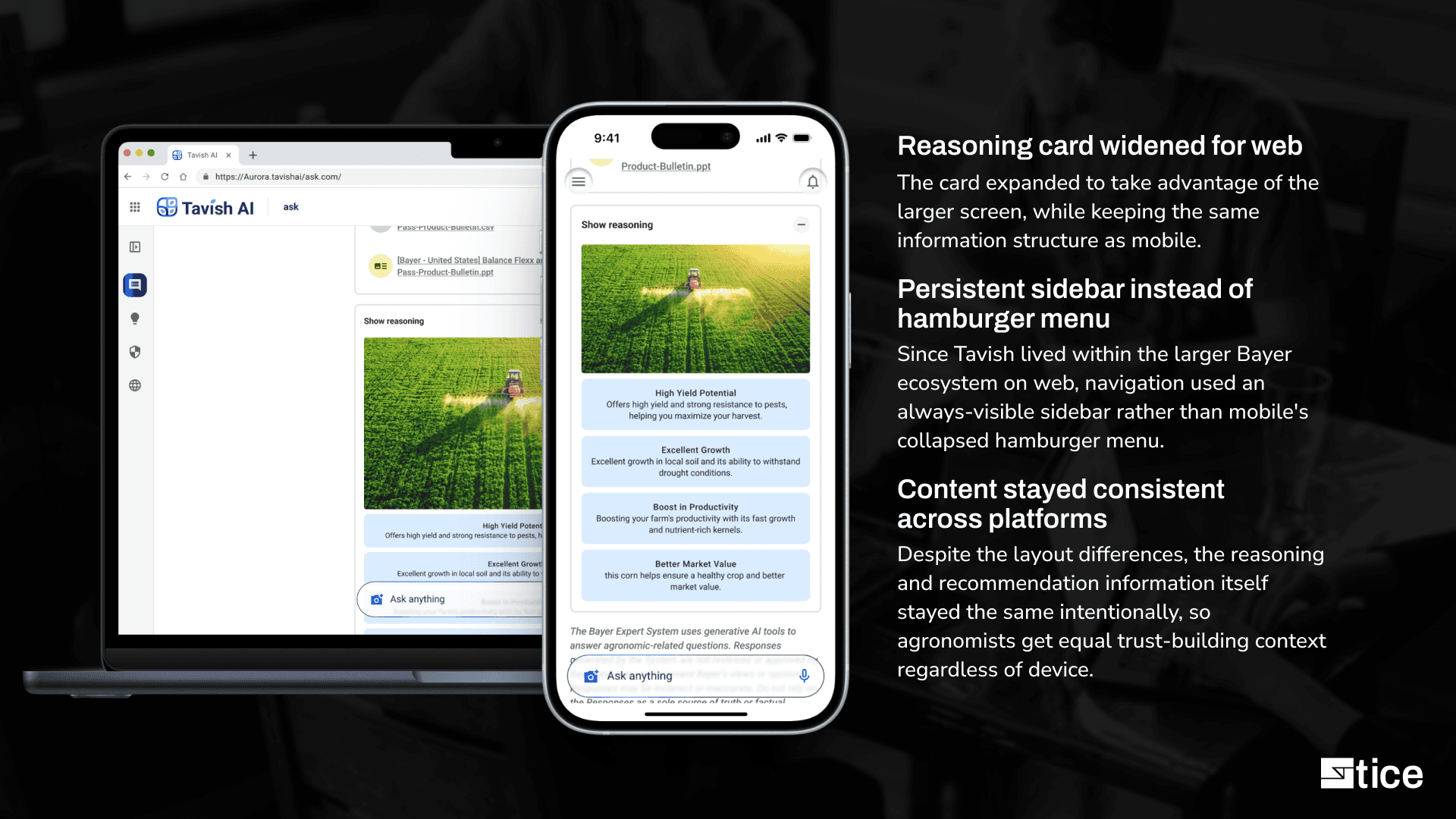
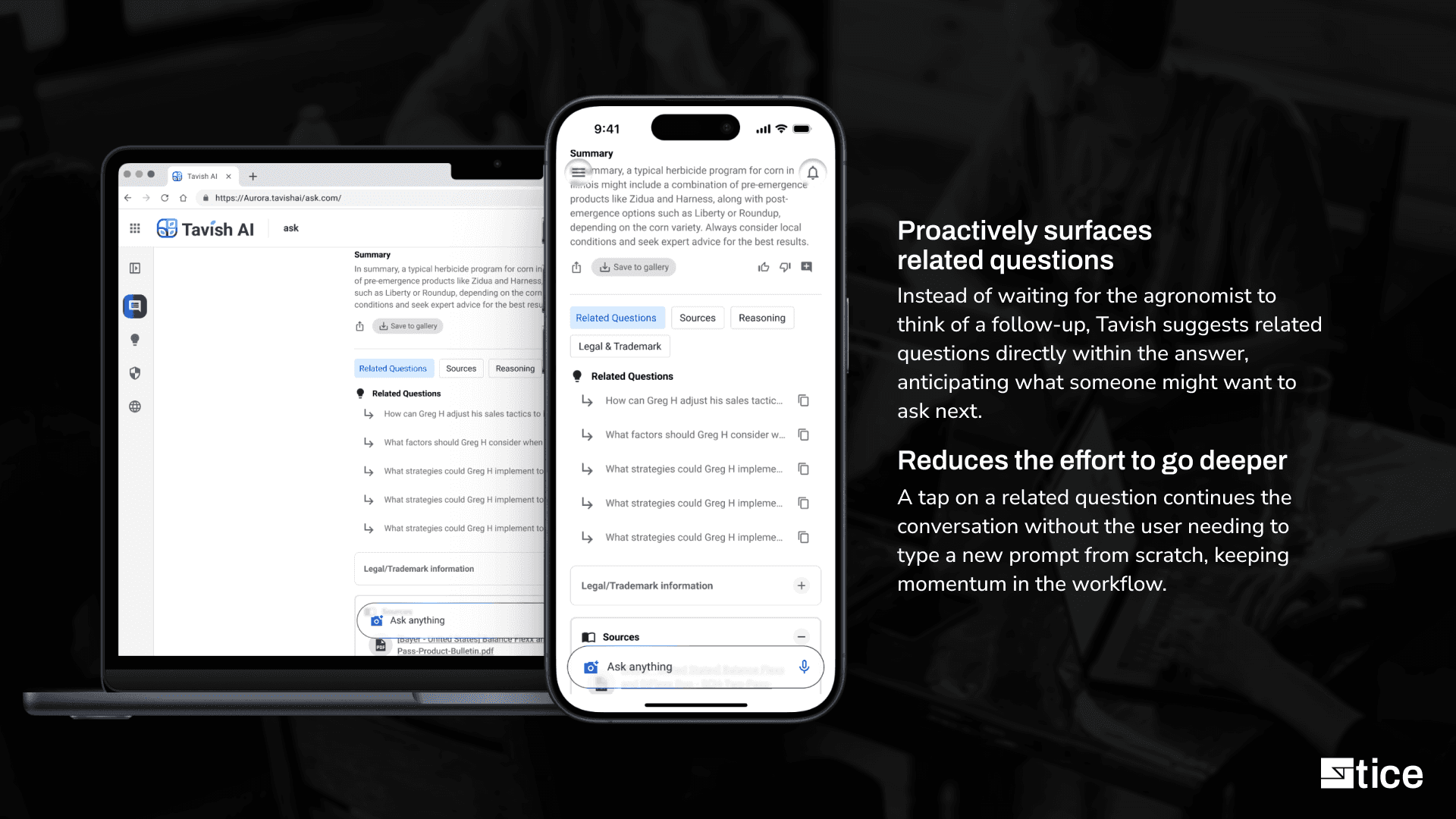
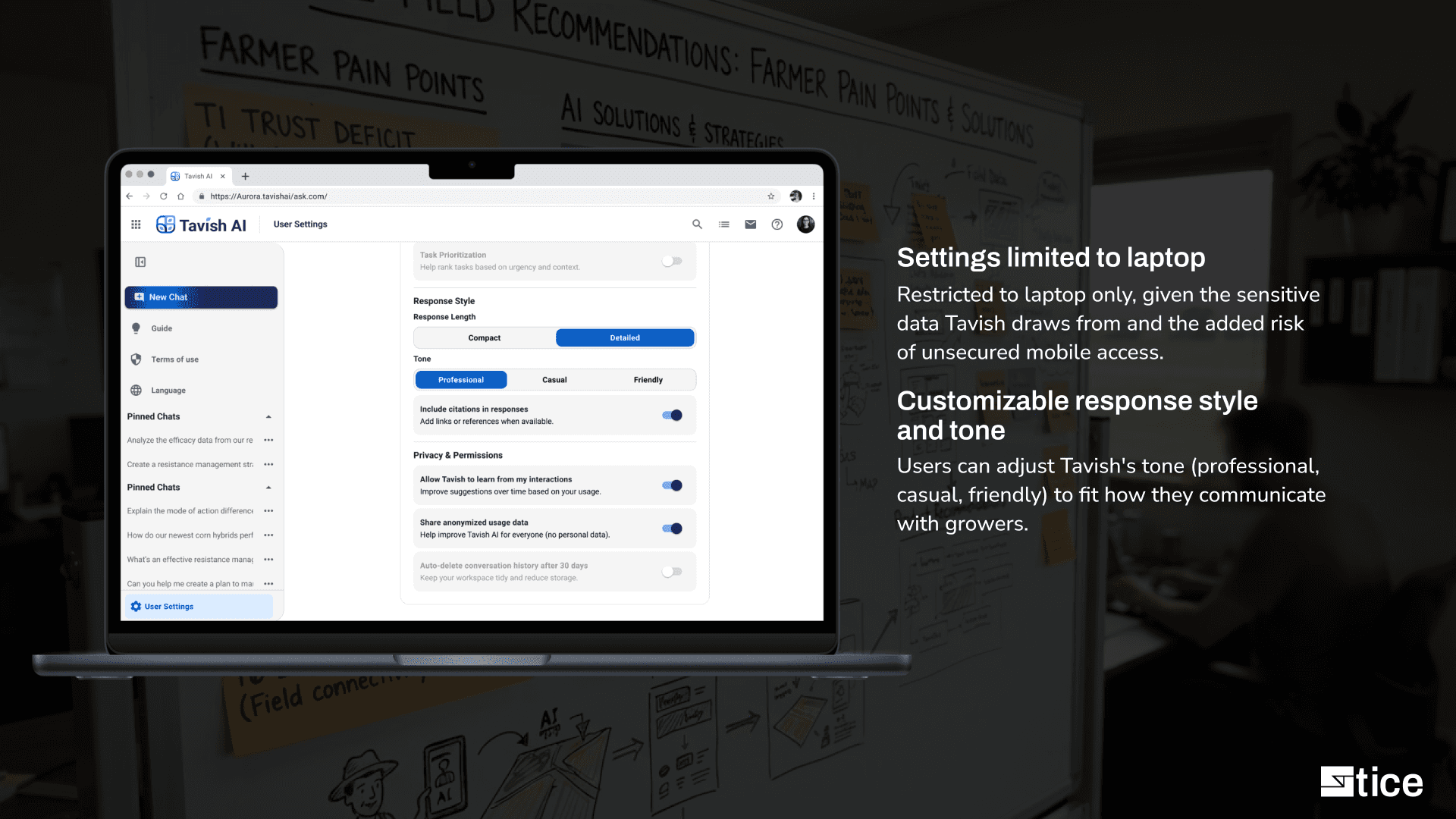
I created end-to-end flows, prototypes, and interaction patterns for how Tavish would surface insights, recommendations, and explanations across web and iOS. This included leading the update from Material UI 2 to Material 3, guided by Bayer's Element Design System, and adding microphone interaction and image upload directly into the composer.

Validate
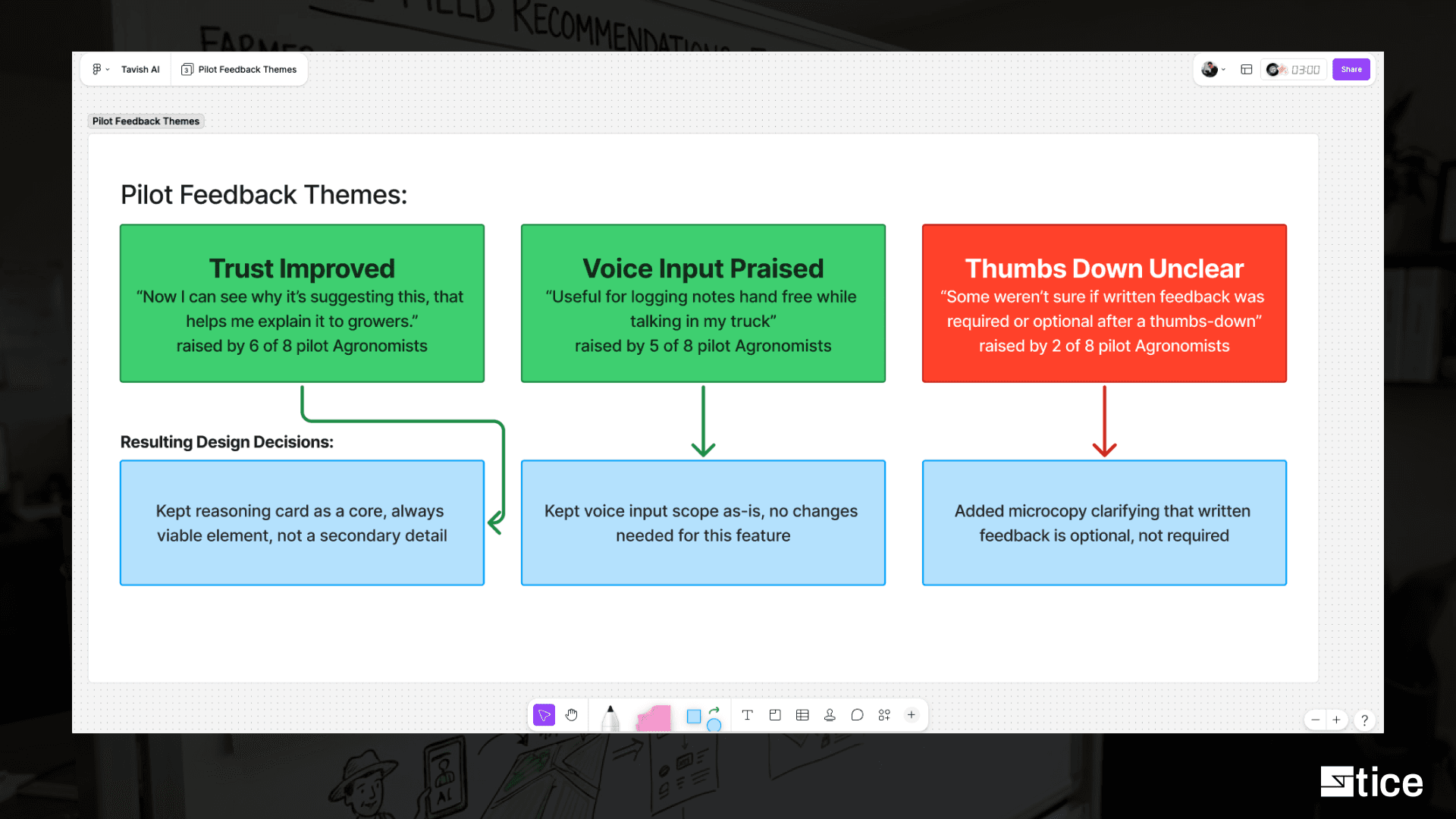
I tested flows and prototypes with agronomists through usability sessions and pilots, then iterated based on field feedback from real planning scenarios.
AI Angle
Tavish already existed as a functioning AI agent, so this wasn't agent design from scratch, it was modernization. I wasn't changing how users interacted with the assistant or redefining its personality; the goal was making the interface and interaction patterns match the capability that already existed in the underlying model.
Process Notes
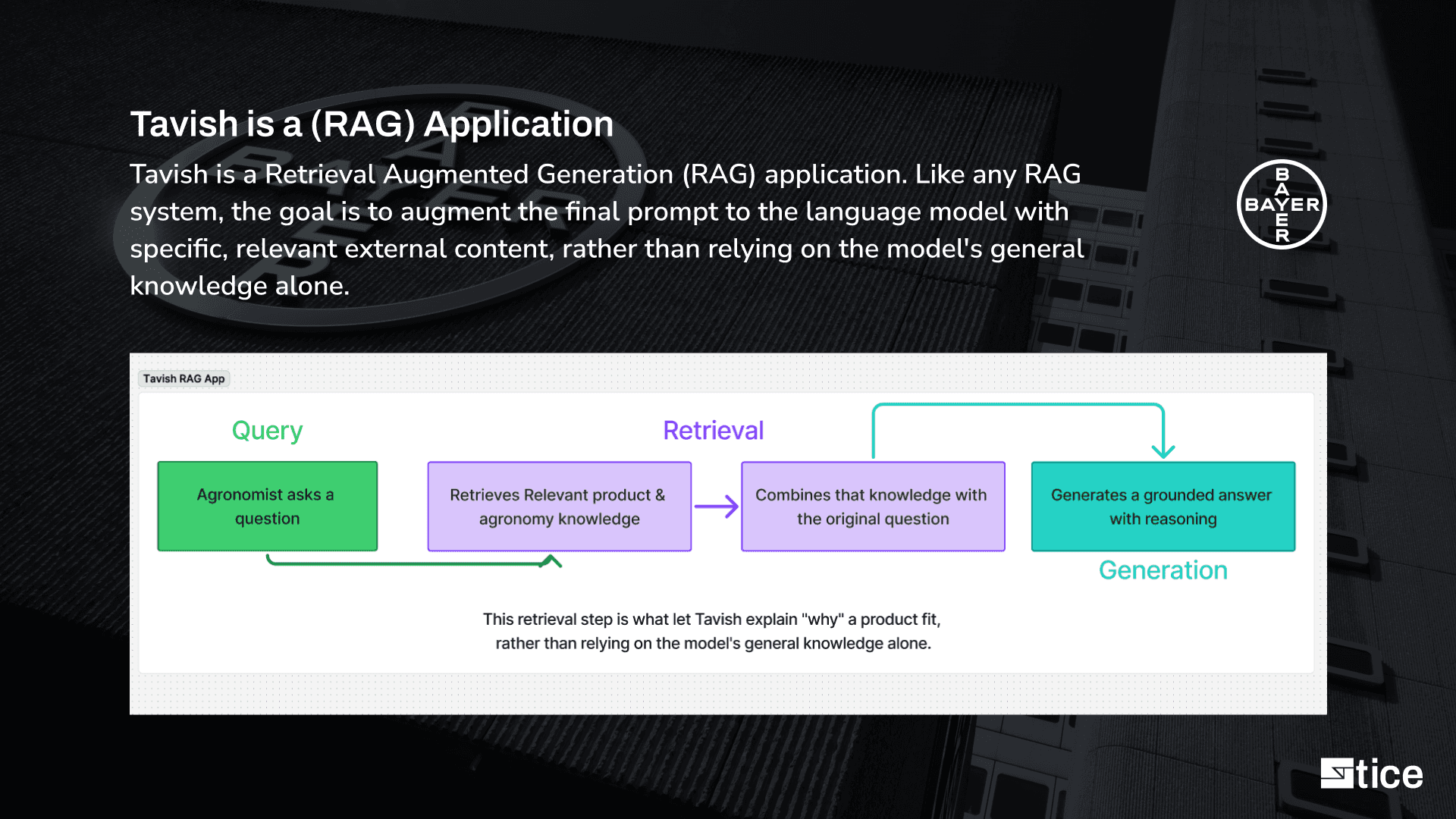
Trust turned out to be the harder problem to solve than the interface itself. Many agronomists still questioned how and why Tavish arrived at certain recommendations, even after the redesign made those recommendations easier to access. That pushed the work beyond visual modernization into a deeper question: could Tavish explain itself. Part of the answer was recognizing that Tavish couldn't fully reason about Bayer's large, complex product catalog without more structure, which led to introducing an MCP-style product knowledge layer so the agent could describe why specific products were beneficial in a given context, not just state a recommendation.
Outcome
The redesign reduced the time to generate a tailored product recommendation by approximately 25%, contributed to a 25% increase in Tavish usage in Q4, and increased completion of agronomic planning workflows during planting season by 21%.

What's Next
Continued work would focus on improving explainability further, adding clearer confidence indicators, and expanding Tavish's underlying product and agronomy knowledge to handle more nuanced edge cases, while keeping agronomists firmly in control of the final decision.
Due to NDA restrictions, extensive visual content from this project can't be shared publicly. Happy to walk through my process and specific decisions in more detail, so feel free to reach out directly.
Blending creativity and functionality.
Designing memorable digital experiences.
